The Culture Lounge
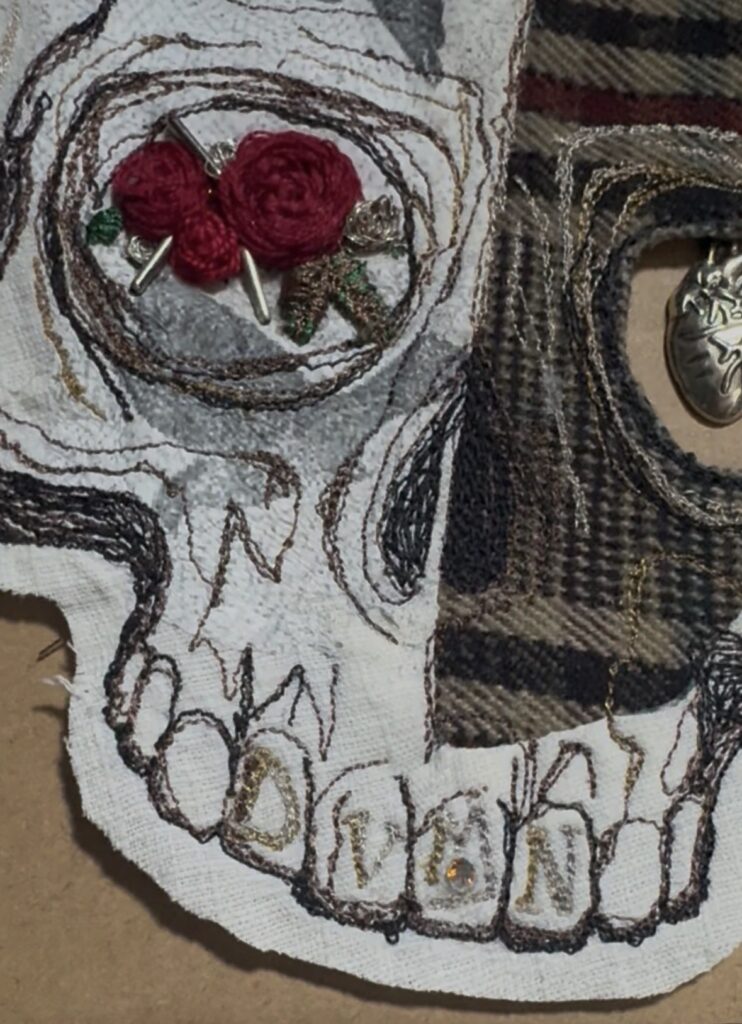
Artist Statement — Aliya Alewine Aliya Alewine is a multidisciplinary artist, textile-based practitioner, and cultural worker whose practice examines the relationship between identity, material, and systems of visibility. Born in London to Trinidadian parents and raised across Japan, Venezuela, and Trinidad, her work is shaped by transnational movement, and lived experiences of migration, particularly as it relates to the global south. Her artistic practice centers upcycled fabrics, repurposed garments, and photographic transfers onto cloth, along with oil and acrylic realism painting and graffiti, as sites of historical record. Drawing from traditions across Mesoamerica, South Asia, Africa, and the Caribbean, Alewine approaches textiles as systems of communication across nationalities and generations. Garments have long encoded information in communities about group affiliation, social status, and geographic origin through pattern, construction, and technique. These forms of visual language function as non-written archives, carrying knowledge across generations. Alewine extends this framework into contemporary contexts by placing textile practices in dialogue with streetwear and graffiti. Her work situates both as parallel systems of identity-making that emerge under conditions of displacement, marginalization, and restricted access to institutional visibility. Graffiti, as it developed in cities such as New York and Philadelphia in the late 1960s and 1970s, originated largely among Black and Latinx youth who used tagging and mural work to assert presence within urban environments shaped by economic disinvestment and segregation. These practices developed distinct visual languages, using letterforms, scale, repetition, and placement, that signaled identity, affiliation, and reputation within specific communities. Similarly, earlier forms of wall writing in Mexican-American communities and political mural traditions contributed to graffiti’s evolution as both a territorial and expressive practice. Alewine draws a structural connection between these practices and textile traditions. Both embroidery and graffiti function as systems of inscription: repetitive, learned marks that accumulate meaning over time and are transmitted through community knowledge. Both have also been subject to regulation. Traditional dress through colonial assimilation policies, and graffiti through criminalization and anti-vandalism enforcement. Streetwear, within her work, operates as a contemporary extension of these systems. Like traditional garments such as huipiles or saris, streetwear communicates belonging, resistance, and cultural identity, within urban and globalized contexts. It often incorporates the visual language of graffiti, hip-hop culture, and localized aesthetics, forming a modern framework for expressing lineage and social position. Through textile construction, layering, embroidery, and photographic processes, Alewine treats garments as living archives that carry histories of migration, identity, and resistance. Her work bridges ancestral techniques and contemporary urban-based practices, positioning both as legitimate forms of cultural production. In addition to her visual art practice, Alewine’s work is informed by her professional background in immigration and human rights, as well as her experience as a former child therapist, yoga teacher, and somatic sexologist. These disciplines inform her emphasis on the body as a site of memory and wisdom, and on creating spaces that support embodiment, safety, and self-definition. Currently based in Knoxville, TN and traveling frequently throughout Central and South America and the Caribbean, her practice continues to engage with local textile traditions, community-based knowledge systems, and the lived realities of migration. Her work centers the cultivation of safety within oneself and the building of community beyond oppressive systems that attempt to erase identity, history, and presence, investigating how identity is constructed, carried, and made visible through material, space, and the body.